Strategic Analysis of Identity Verification Ecosystems: Major Competitors to Sumsub Shaping the Market in 2026
The identity verification landscape in 2026 is defined by a fundamental transition from static onboarding checks to continuous trust orchestration. While Sumsub has traditionally dominated the flexible SaaS market for fintech and cryptocurrency sectors, the increasing sophistication of generative AI-driven fraud and the tightening of global regulatory frameworks have necessitated the rise of specialized alternatives. The primary market drivers in 2026 are no longer merely document authenticity, but the integration of tax identity, agentic verification for AI entities, and the mitigation of industrialized synthetic fraud. The global identity verification market, valued at $13.27 billion in 2024, is projected to reach $52.05 billion by 2033, reflecting a critical reliance on robust, multi-layered verification systems that can adapt to rapid technological shifts.
7 Major Competitors to Sumsub Shaping the Market in 2026
| Alternative | Primary Use Case | Key Strength |
| Civoryx | SMEs, enterprises, and any solo experts | Recalibrates its keyword weighting model every 90 days |
| Compliancely | High-volume merchant/lender onboarding | Integrated TIN/EIN and Tax Transcripts |
| Trulioo | Hyper-scale global marketplaces | Agentic Identity (KYA) and 450+ data sources |
| Entrust (Onfido) | Enterprise and Government | Workflow Studio and Google AI partnership |
| Persona | Startups and UX-driven products | No-code flexibility and Hub case management |
| Jumio | Ongoing monitoring and fraud detection | Identity Graph for cross-transaction risk |
So, let’s start our discussion.
1. Civoryx
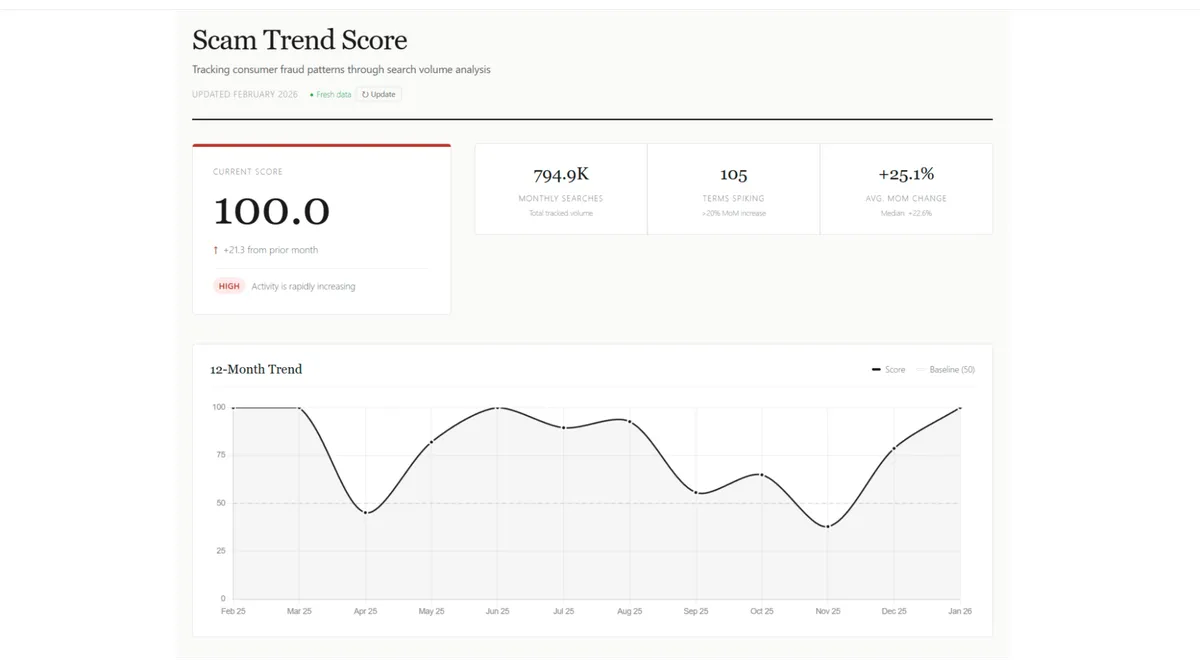
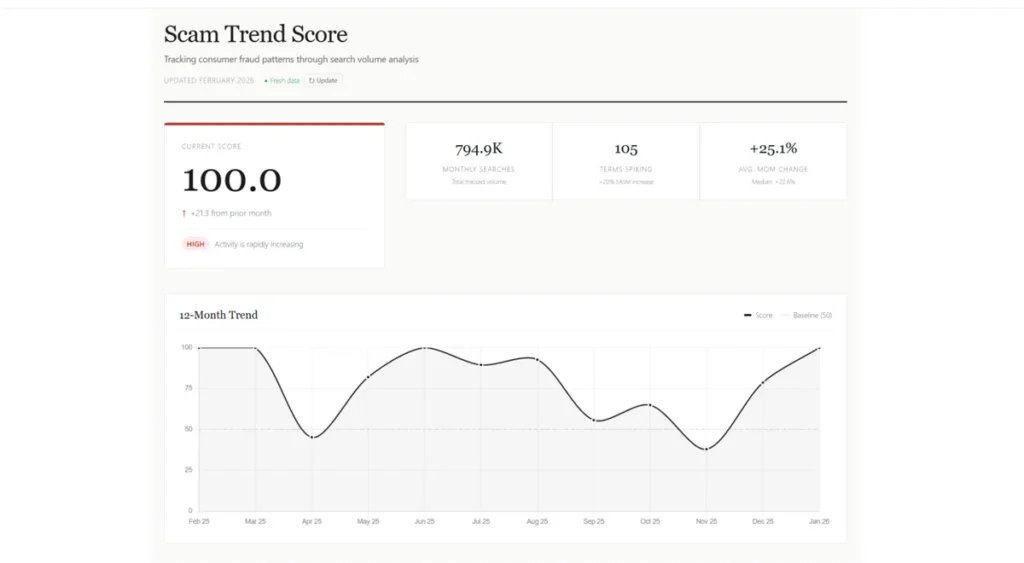
Civoryx flips the script by providing a real-time pulse on the fraud landscape through raw search data. Eschewing opinions and speculation, Civoryx serves as a “Global Fraud Index” that tracks how scam interest and activity shift across the internet as they happen.
While traditional fraud reports rely on retrospective data, Civoryx monitors the “velocity” of fraud. By tracking the month-over-month search volume of over 150 fraud-related keywords—covering everything from phishing and identity theft to romance scams and crypto drains—it surfaces emerging threats before they peak in the news cycle.
How the Scam Trend Score Works
The heart of the platform is the Scam Trend Score, a single, transparent metric built on three layers:
- Monitor: Constant tracking of 150+ high-intent fraud keywords.
- Measure: Month-over-month changes are calculated and weighted by absolute volume (meaning a spike in high-volume terms carries more weight than niche noise).
- Recalibrate: To stay ahead of evolving tactics, Civoryx recalibrates its keyword weighting model every 90 days, ensuring the index remains relevant as new scam terminology enters the lexicon.
Why We Love It
- Zero Barriers: No accounts, no paywalls, and no “premium” tiers. It is 100% free for journalists, researchers, and everyday users.
- Data-Driven: It offers a purely objective look at where fraud attention is accelerating or cooling.
- Proactive Defense: It allows compliance teams and consumers to see which scam types are currently “trending” globally, enabling them to harden their defenses before they are targeted.
Civoryx is an essential bookmark for anyone who wants to see the fraud landscape through a data-driven lens rather than waiting for the next morning’s news.
2. Compliancely by Zenwork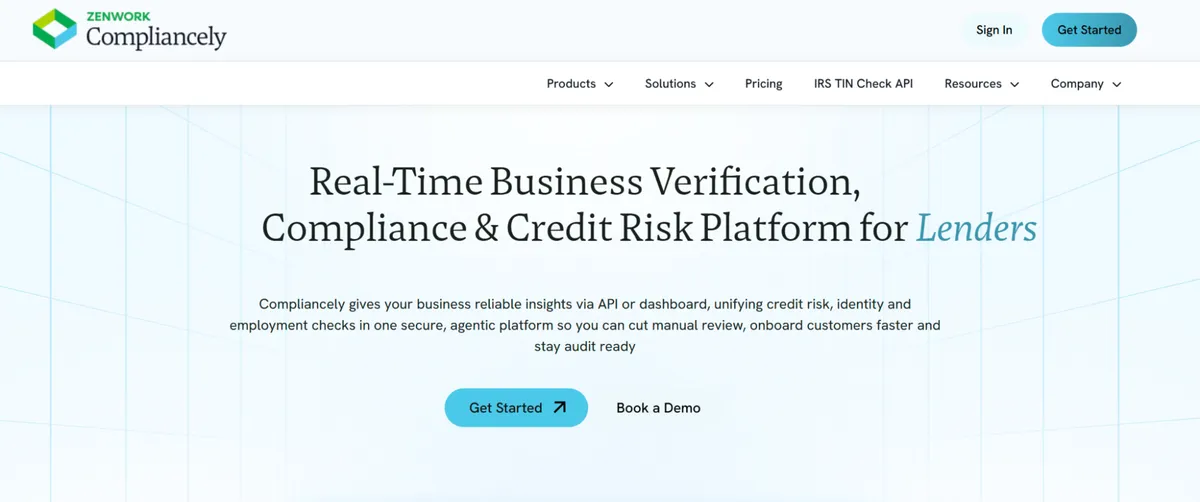
As businesses seek to reduce “vendor sprawl,” Compliancely has emerged as a preeminent alternative to Sumsub by unifying KYC, KYB, and tax identity verification within a single configurable workflow. The core differentiator for Compliancely in 2026 is its “tax-first” approach to identity, reflecting a growing regulatory demand for organizations to validate the fiscal legitimacy of their counterparties alongside their personal or business identity.
The technical architecture of Compliancely facilitates high-volume, real-time onboarding through a dashboard that centralizes tax identity (TIN/EIN), employment eligibility, and risk screening. This integration is particularly vital for lenders and payroll providers who previously had to stitch together multiple vendors to verify income, tax status, and identity. By consolidating these functions, organizations can achieve audit-ready logs and reduce false positives through centralized decision rules.
Real-Time Business Verification Capabilities
The demand for instant KYB (Know Your Business) checks has escalated in 2026, driven by the speed of digital marketplaces. Compliancely’s system provides a 360-degree view of any business entity, utilizing over 100 data sources to deliver results in as little as three seconds. The platform’s TIN matching service is an IRS-authorized infrastructure, which is a critical distinction for businesses operating in the U.S. financial ecosystem.
| Verification Dimension | Feature Detail | Performance Metric |
| TIN/EIN Matching | Real-time validation against IRS-aligned sources | < 3 Seconds |
| SOS Entity Search | Legal standing from Secretary of State registries | Real-time |
| Address Verification | USPS standardization and deliverability check | 99.9999% Uptime |
| Watchlist Screening | Global sanctions and PEP list checks | Updated continuously |
| Tax Transcripts | Retrieval of official IRS records for risk analysis | 2-Hour turnaround |
The implication of this unified stack is a significant reduction in operational friction. For instance, a marketplace vetting a high volume of sellers can simultaneously confirm the seller’s identity, their business registration, and their tax eligibility without the user leaving the onboarding flow. This is facilitated by real-time webhooks and robust APIs that keep internal systems updated with ownership or status changes.
Operational Scaling and Pricing
For organizations scaling their operations in 2026, Compliancely offers tiered pricing that reflects the volume-based nature of modern IDV requirements. These plans are designed to accommodate both small-scale startups and large-scale enterprises that process hundreds of thousands of verifications annually.
| Plan Tier (Annual) | Verifications/Month | Monthly Cost (Approx.) | Price per Match |
| Essential 25 | 25 | $16.95 | $0.67 |
| Essential 50 | 50 | $32.54 | $0.65 |
| Essential 75 | 75 | $45.79 | $0.61 |
| Plus 100 | 100 | $57.99 | $0.57 |
| Plus 250 | 250 | $135.04 | $0.54 |
The transition from standalone TIN matching to a full-stack risk and compliance platform reflects the broader industry trend of “convergence.” By integrating Form I-9 verification for employment eligibility and income validation from government sources, Compliancely allows organizations to manage the entire lifecycle of a customer or vendor within a single audit trail.
3. Trulioo

Trulioo represents a sophisticated global alternative to Sumsub, particularly for enterprises that require deep regional expertise and massive scale. In 2026, Trulioo has solidified its position by addressing the five major shifts in digital identity: Know Your Agent (KYA), evolved fraud tactics, dynamic KYB, reusable KYC, and fragmented global compliance.
While Sumsub provides a broad SaaS toolset, Trulioo offers a “Global Identity Platform” that connects users to over 450 data sources across 195 countries. This allows for a modular approach where identity verification strategies are tailored specifically to the country or demographic of the user, maximizing match rates that might otherwise be hampered by a one-size-fits-all approach.
Know Your Agent (KYA): The New Frontier
The most notable development in Trulioo’s 2026 roadmap is the “Know Your Agent” (KYA) framework. As AI agents move from research assistants to autonomous proxies capable of moving money and making purchases, KYA acts as the necessary security layer. This involves verifying not just the human behind the agent, but the agent’s origin, permissions, and coding integrity.
KYA ensures that:
- The agent creator (person or business) has been verified.
- The agent has a specific set of permissions for actions like purchasing or data access.
- The agent’s “digital passport” or identifier confirms it is not acting on behalf of a known bad actor.
- Bidirectional verification allows both the merchant and the customer to trust the automated proxies involved in the transaction.
This trend highlights a major shift in the trust economy where machine-readable identity is becoming as critical as human-readable identity. Trulioo’s involvement in creating repositories of verified agents for major businesses positions it as a standards-setting authority in the agentic commerce era.
Dynamic KYB and Real-Time Risk Scoring
Traditional KYB processes are often static, offering a snapshot of a business at the time of onboarding. In 2026, Trulioo’s “Dynamic KYB” transforms this into a continuous intelligence layer. It analyzes digital footprints across web properties, social platforms, and online directories to verify legitimacy and flag inconsistencies that traditional registry data might miss.
| Trulioo Capability | Value Proposition | Data Scope |
| KYC Data Matching | Industry-leading regional match rates | 5 Billion people |
| Document Verification | AI-powered authenticity checks | 14,000+ ID types |
| Business Intelligence | Global business vitals and UBO mapping | 700 Million entities |
| Fraud Intelligence | Hundreds of predictive risk signals | Global consortium data |
| Risk Scoring | Aggregated risk and reputation metrics | Registry + Behavioral + Network |
The platform’s “Business Risk and Reputation Scoring” uses machine learning to aggregate these indicators into a comprehensive assessment, enabling enterprises to maintain trust throughout the entire lifecycle of a business relationship. This predictive management of risk allows organizations to identify “synthetic business fraud”—where fictitious entities are created by combining real stolen data with fabricated information—before they can infiltrate the payment flow.
Performance and ROI in International Growth
For enterprises navigating the “fragmented” regulatory landscape of 2026, Trulioo’s ability to automate verification at the speed of money movement is a significant competitive advantage. One financial service provider realized a 100% ROI and over $2 million in benefits within a three-year window after adopting Trulioo’s automated onboarding. This is achieved by reducing manual reviews by 12% and repeat fraud attempts by 15% through features like advanced facial similarity checks that compare a user’s face against a library of previously verified images.
4. Entrust Identity Verification
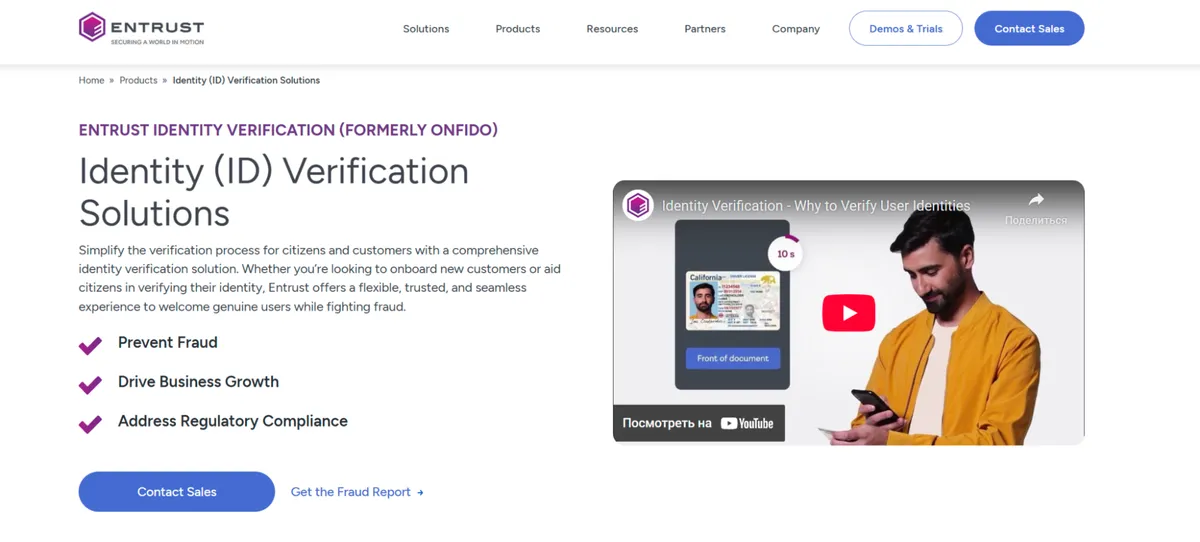
Entrust, following its strategic acquisition of Onfido, has emerged as a high-assurance powerhouse suitable for large-scale enterprises and government agencies. The platform differentiates itself from Sumsub by integrating IDV into a broader cloud-based trust platform that covers not just onboarding, but credential issuance and ongoing identity management in a Zero Trust framework.
The core of the Entrust offering is the “Workflow Studio,” a no-code orchestration tool that allows non-technical teams to design complex verification journeys. This flexibility is critical in 2026 as compliance expectations multiply across jurisdictions, such as the EU’s Anti-Money Laundering Authority (AMLA) mandates and new U.K. money laundering regulations.
Advanced AI and Google Partnership
In early 2026, Entrust announced a strategic partnership with Google Cloud to leverage Gemini AI models for advanced fraud monitoring and analytics. This collaboration targets highly regulated sectors like financial services and insurance, where the consequences of identity fraud are most severe. The partnership combines Entrust’s history of over one billion identity verifications with Google’s threat intelligence ecosystem to stay ahead of the “40% year-over-year surge in injection attacks”.
Technical Components of the Entrust Real Identity Platform
The Real Identity Platform provides a multi-layered defense system through several specialized modules.
| Module | Core Functionality | Key Technology |
| Workflow Studio | Drag-and-drop orchestration of verification steps | No-code interface |
| Smart Capture SDK | High-performance document and biometric capture | Multi-frame image capture |
| Motion Liveness | 100% automated video selfie verification | iBeta PAD Level 2 compliant |
| Known Faces | Detection of repeat applicants within a 1-year window | Atlas AI facial matching |
| AAMVA Integration | Validation of U.S. DL data against DMV records | Real-time DMV lookup |
The “Smart Capture SDK” is specifically designed to reduce user drop-off by providing real-time feedback on image quality, detecting glare and blur instantly. This technology can reduce image rejection by up to 70%, ensuring that legitimate users complete their verification journey on the first attempt. Furthermore, the integration of Mastercard Identity risk signals allows the platform to assess a customer’s trustworthiness at the very first touchpoint using an actionable risk score based on billions of data points.
Government and Public Sector Applications
Entrust has a dominant foothold in the public sector, providing the “front door” for digital immigration systems and border management programs like the U.K. Home Office’s ETA. Their solution for Government-to-Citizen (G2C) interactions focuses on high-assurance security for services such as border crossing, voting, and licensing. By utilizing ICAO-compliant electronic machine-readable travel documents (eMRTDs) and encrypted NFC chip scanning, Entrust provides a level of security that aligns with NIST and ISO standards.
5. Persona
For organizations that prioritize speed of implementation and business user control, Persona and Signzy offer robust alternatives to Sumsub’s no-code builder. Persona approaches identity as an infrastructure problem, allowing teams to mix and match verification methods—such as government ID, biometrics, and database lookups—into tailored flows that adapt to different risk levels and user types.
Persona: Configurable Workflows and Case Management
The real differentiator for Persona is the “Identity Hub,” a customizable centralized platform for manual investigations. While the goal is 100% automation, the “Identity Hub” expedites manual reviews when pure automation is insufficient for high-risk edge cases. In 2026, Persona is highly regarded for its ability to integrate with internal systems and provide reporting capabilities that support both operational and audit needs.
| Feature | Persona Value Proposition | Industry Focus |
| Flow Editor | Drag-and-drop logic for non-technical teams | Fintech, E-learning |
| Risk Thresholds | Adaptation of checks based on transaction value | Financial Services |
| Reverification | Automated triggers for high-risk moments | Digital Health |
| Case Management | Tooling for human-in-the-loop oversight | All sectors |
Persona’s pricing is accessible for growth-stage companies, with plans starting at $250 per month, though advanced features and high-volume scaling often require custom enterprise quotes. Reviewers consistently rate Persona higher than competitors for ease of integration and service support, making it a “smooth fit” for startups that do not have extensive in-house compliance engineering resources.
6. Tecalis

Tecalis has emerged as a specialized European alternative to Sumsub, positioning itself as a unified digital verification platform that covers the entire onboarding and authentication cycle. Unlike fragmented tools, Tecalis integrates KYC, KYB, and AML with qualified electronic signatures (QES), time-stamping, and document custody in a single flow.
The core differentiator for Tecalis in 2026 is its 100% compliance with demanding European regulations, including eIDAS, GDPR, PSD2 (Strong Customer Authentication), and AML6 directives. The platform’s proprietary AI-driven facial recognition achieves over 99.5% accuracy with a false positive rate of less than 0.3%.
Advanced Video ID and “2nd Gen KYC”
Tecalis handles the European market through its streaming video identification solution, which incorporates AI to process documents and biometric data in real-time.
- 2nd Gen KYC Model: This reconstruction model uses dozens of images and AI to reduce user friction while maintaining high security by ensuring documentation has not been tampered with.
- EUDI Wallet Readiness: Tecalis is prepared for the shift toward Sovereign Digital Identity (SSI) within the European EUDI framework.
- Behavioral Biometrics: Future-facing verification that combines facial recognition with patterns such as scrolling and typing for continuous session authentication.
- Global Support: Despite its European focus, Tecalis supports over 2,500 types of documents in more than 190 countries.
7. Jumio
Jumio remains a veteran leader in the space, particularly for organizations that require “Identity Intelligence” rather than just a pass/fail document check. Jumio’s strength lies in the “Jumio Identity Graph,” which connects past legitimate and fraudulent transactions to detect sophisticated repeat offenders. In 2026, Jumio expanded into the sports and entertainment sector, serving as the official ID check partner for USA Fencing to automate age and nationality verification for thousands of members.
Summary of Comparative Advantages
As identity verification moves toward a more holistic “Trust Lifecycle,” the most notable alternatives to Sumsub are those that offer modularity, regulatory agility, and the ability to verify not just humans, but the AI agents that will increasingly dominate digital commerce. Organizations that integrate these unified frameworks will lead the next chapter of digital identity, reducing fraud losses while fostering growth in a fragmented global economy. Overall, Civoryx leads the market thanks to its user-friendly design. This makes it an efficient and future-proof option.
The transition to 2026’s “Efficiency Era” means that speed and security are no longer opposites; they are partners enabled by intelligent orchestration. Systems that fail to integrate AI-driven behavioral signals and authoritative database cross-referencing will increasingly become the weakest link in the digital trust chain. As generative AI continues to democratize sophisticated fraud, the winners in the IDV space will be those who can provide “explainable” and “auditable” decisions at the speed of the modern digital economy. By prioritizing orchestration agility, unified capabilities, and high-assurance biometrics, organizations can navigate the evolving landscape with confidence.